Mulch Calculator — How Much Mulch Do You Need?
Yards, bags and bulk-vs-bagged cost for every bed.
Rectangle, circle and ring | 2 cu ft bag counts | Bulk vs bagged cost | 2026 prices
Mulch Calculator
Depth must be between 0.5 and 24 inches. Most beds use 2–4 inches.
Enter one price or both — with both, the calculator compares bulk vs bagged for you.
Free – no sign-up.
Enter your measurements to see your result.
| Mulch type | Weight per cubic yard | Bags per cubic yard |
|---|---|---|
| Shredded hardwood | 400-800 lb (0.20-0.40 t) | 13.5 (2 cu ft bags) |
| Cedar / cypress | 400-800 lb (0.20-0.40 t) | 13.5 (2 cu ft bags) |
| Dyed / colored | 400-800 lb (0.20-0.40 t) | 13.5 (2 cu ft bags) |
| Rubber | Varies by brand – check the bag label | About 34 (0.8 cu ft bags) |
Bag counts are 27 cu ft per yard divided by the bag size. Wet mulch weighs more than dry mulch; these are dry weights for bark mulches.
A 10 × 20 ft bed at 3 inches deep needs 1.85 cubic yards of mulch — about 28 bags of 2 cu ft once you add the 10% waste allowance (2.04 cubic yards). One cubic yard covers 108 square feet at 3 inches. Measure your beds, pick a depth, and the mulch calculator below gives you cubic yards, bag counts, and the bulk-vs-bagged cost so you can see which way is cheaper before you buy.
Volume notice: Cubic yards measure volume, not weight. A cubic yard of mulch weighs about 400–800 pounds when dry, so always convert with the material’s density — and never guess weight from volume alone.
How the mulch calculator works
The formula is the same one the cubic yard calculator uses: square feet × depth in inches ÷ 324 = cubic yards. The mulch part is what happens next — turning that volume into bags, and bags into money.
Worked example: A bed 10 ft wide and 20 ft long is 200 square feet. At 3 inches deep: 200 × 3 ÷ 324 = 1.85 cubic yards. Mulch bags are sold by volume, usually 2 cubic feet per bag, and one cubic yard is 27 cubic feet. So 1.85 yards is 50 cubic feet, and 50 ÷ 2 = 25 bags before waste — with the 10% allowance it is 28 bags. Buy 28 bags, or order 2 cubic yards in bulk and keep a little spare — this mulch calculator shows you both, and the cost of each. For a ring around a tree, measure the outer diameter and the trunk diameter. A 6 ft wide ring around a 1 ft trunk at 3 inches: area = π × (3² − 0.5²) = 27.5 sq ft, so 27.5 × 3 ÷ 324 = 0.25 cubic yards — about 4 bags. People over-order tree rings more than any other mulch job, because they forget the trunk takes up the middle.
| Depth (inches) | Square feet covered by 1 cubic yard |
|---|---|
| 1 | 324 |
| 2 | 162 |
| 3 | 108 |
| 4 | 81 |
| 6 | 54 |
Table of Contents
How deep should mulch be?
| Use | Depth | Notes |
|---|---|---|
| Flower beds, established plants | 2–3 in | Enough to hold moisture and block weeds |
| New beds, bare soil | 3–4 in | Bare soil needs the extra cover |
| Around trees | 2–4 in | Keep 3–6 in from the trunk; never pile mulch against bark — it rots |
| Vegetable garden paths | 3–4 in | Heavy foot traffic packs it down |
| Play areas (wood mulch) | 6–9 in | Fall cushion, not decoration — check local guidance |
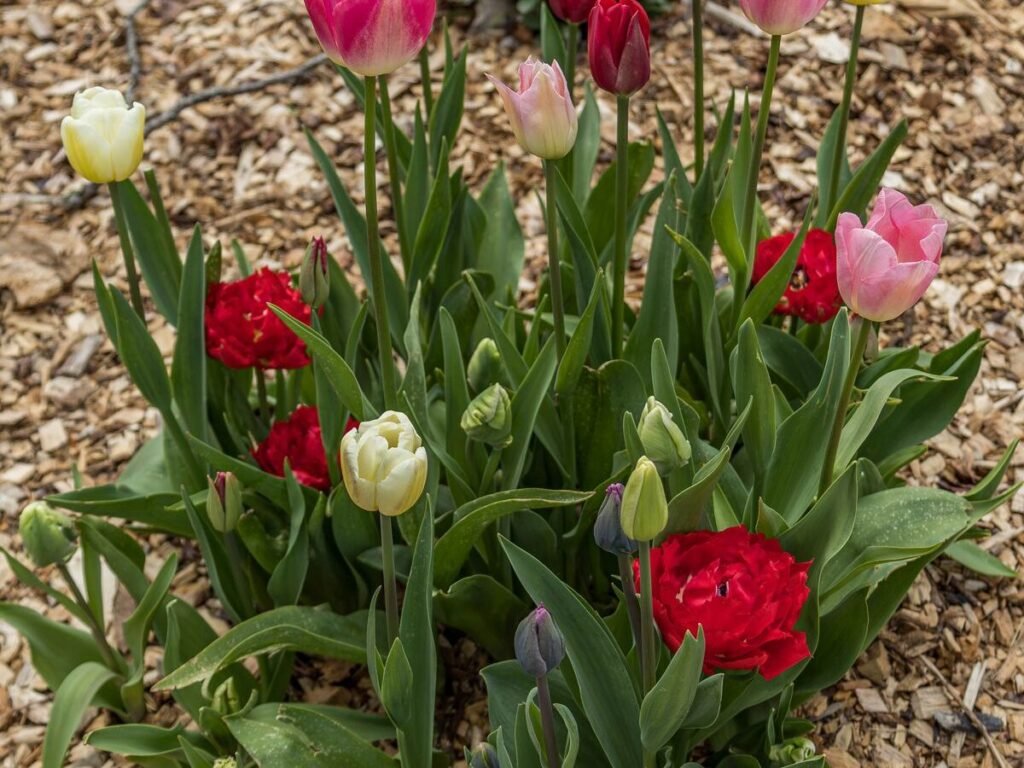
Two inches is the minimum that does any good. Four inches is the most you should use around most plants — deeper than that and you start starving the soil of air and water. The University of Illinois Extension guidance behind these numbers is 2–4 inches for landscape beds, and that is the range the calculator defaults to. One cubic yard covers 162 square feet at 2 inches, 108 at 3 inches, and 81 at 4 inches. If you are refreshing last year’s mulch rather than starting bare, measure what is left and top up to 3 inches — you will usually need half what a fresh bed needs. Check the volume for any depth with this mulch calculator before you buy.
Bagged vs bulk — where the breakeven is
This is the money question, and it is the one most mulch pages skip. Bulk mulch is cheaper per yard. Bags are easier to carry and store. The breakeven point is where the two costs cross. Using the 2026 bands — bulk shredded hardwood $30–$50 per cubic yard, bagged $41–$95 per cubic yard ($3–$7 per 2 cu ft bag, 13.5 bags per yard) — bulk wins on material alone as soon as the job is bigger than about one cubic yard. The maths: bagged costs roughly 1.5–2× bulk per yard, so a single bed of 200 square feet at 3 inches (1.85 yards) costs about $56–$93 in bulk against $76–$176 in bags. Add a $40–$100 delivery fee and the breakeven moves to around 2–3 yards (HomeBuild Atlas, updated Nov 2026) — below that, bags from a store you drive to can work out cheaper. The honest exceptions: if you have no driveway space for a bulk delivery pile, if you are doing one small bed and the delivery fee is $40–$100, or if you are carrying it through a gate a wheelbarrow cannot reach, bags are the right call even though they cost more per yard. This mulch calculator shows both prices so you can judge your own situation instead of taking a rule of thumb.
What mulch costs in 2026
2026 US national planning bands (Angi / HomeGuide / Lawn Love, 2026 — confirm with two local suppliers).
| Mulch type | Bulk (per cubic yard) | Bagged |
|---|---|---|
| Shredded hardwood | $30–$50 | $41–$95/yd³ ($3–$7 per 2 cu ft bag) |
| Cedar / cypress | $45–$80 | Higher than hardwood |
| Dyed / colored | $35–$60 | — |
| Rubber | $80–$180 | $8–$14 per 0.8 cu ft bag |
Delivered and spread by a crew, mulch runs about $70–$120 per cubic yard in 2026 (Mowing Magic, Oct 2026) — roughly $0.65–$1.11 per square foot at 3 inches deep. That is the installed price; the bulk price above is materials only.
Delivery is usually $40–$100 per trip on top. A bulk order under 2 yards often carries the same delivery fee as a 10-yard order, which is another reason small jobs sometimes work out cheaper in bags from a store you drive to yourself.
Texas note
West Texas sun and wind eat mulch faster than the national guides assume. A 3-inch layer in Lubbock will be closer to 2 inches by the end of one hot summer, so plan on topping up once a year, in spring, rather than mulching once and forgetting it. Bermuda grass will also creep into beds from the edges — a clean edge and a full 3 inches at the border slows it down, though nothing stops it entirely. And on caliche ground, mulch is doing two jobs: holding moisture and slowly building something that resembles soil. Give it the full depth.
Frequently asked questions
How many bags of mulch are in a cubic yard?
13.5 bags of 2 cu ft. That is 27 cubic feet per yard divided by 2. Buy 14 bags if you want a whole-yard equivalent with a little spare.
How much mulch do I need for a 10 × 10 ft bed?
At 3 inches deep: 100 × 3 ÷ 324 = 0.93 cubic yards — about 13 bags of 2 cu ft, or 1 cubic yard in bulk. Work it out for any bed size with this mulch calculator.
Is 2 inches of mulch enough?
It is the minimum. It will hold some moisture and slow weeds, but 3 inches does the job properly in most beds, and it lasts longer between top-ups.
Should I put landscape fabric under mulch?
Usually no for planting beds — it blocks the mulch from breaking down into the soil and makes replanting a fight. It has a place under paths and in permanent gravel areas, not under a bed you will dig in next spring.
Does mulch attract termites?
Wood mulch against a house foundation is a risk factor, not a guarantee of termites. Keep mulch 6 inches below siding and a few inches away from the foundation wall, and the risk drops a lot.
When is the best time to mulch in Texas?
Spring, after the last frost and before the heat arrives. A spring layer holds moisture through summer; a thin autumn top-up helps beds going into winter.
Should I mulch in late fall, before winter?
Yes — a 2–3 inch layer before the first freeze keeps the soil warm and protects roots through cold snaps, and it stops the freeze–thaw heaving that lifts shallow-rooted plants. In cold climates the rule is the opposite — mulch after the ground freezes — but in Texas, mulch before the freeze arrives.
What is pine straw mulch?
Pine needles, sold as “pine straw” across the South. The needles weave together, so the layer holds on slopes and resists washing away in heavy rain — useful on a sloped bed. It is sold by the bale, not by the cubic yard, so the calculator’s yard and bag figures do not apply to it; this page lists it so you know the option exists.
When is the best time to mulch?
Late spring or early summer, once the soil has warmed up but still holds moisture. Mulch put down then locks the moisture in for the hot months. Mulch spread in fall or winter keeps the soil cold longer and delays spring growth — useful against freeze–thaw damage, but it means a slower start in spring.
Does wood-chip mulch steal nitrogen from my plants?
No — not when it sits on top of the soil. Studies show wood chips spread as mulch actually raise nutrient levels in the soil and the plants growing in it. The nitrogen worry only applies when fresh woody material is mixed into the soil. Bark is even quieter: its decay barely touches soil nitrogen at all.
Related tools
Try the Cubic Yard Calculator for any material and shape, or the Gravel Calculator for driveways, paths and patios in yards and tons.
Need a pro in Lubbock?
If the beds are big, the mulch is heavy, and the weekend is short, Landscaping Lubbock installs mulch as part of its landscaping service. Run the numbers above first, so you know how many yards any quote should cover.
Sources and methodology: The 27 cubic feet in a cubic yard is the US customary definition (National Institute of Standards and Technology, NIST Handbook 44, 2026). Cost bands are 2026 US national planning bands from Angi, HomeGuide and Lawn Love. Our mission is simple: one free calculator for every landscaping material, with the working shown, so you never over-order. Methodology reviewed: November 2026.
Calculation notice: Results are estimates for planning and ordering. Actual volume depends on how the material settles and how level the ground is, so confirm the order with your supplier before delivery.