
Raised Bed Soil Calculator — How Much Soil for a Raised Bed?
Use this raised bed soil calculator to work out exactly how much soil a raised bed needs — in cubic feet, cubic yards and 40 lb bags — before you buy. Enter the bed’s shape and depth, pick a mix recipe, and it works out the calculated volume, the order volume with 10% waste, the topsoil, compost and perlite in your mix, and the cost of buying in bulk or in bags. It is free, instant and needs no sign-up.
Raised bed soil calculator
Raised beds are the honest way to garden on poor ground: you build the soil instead of fighting what is underneath. The catch is that soil is sold by the cubic yard, beds are measured in feet and inches, and bags are sold by weight — three different units that make guessing expensive. This raised bed soil calculator does the conversions for you, so you order enough the first time and do not pay for a second delivery.
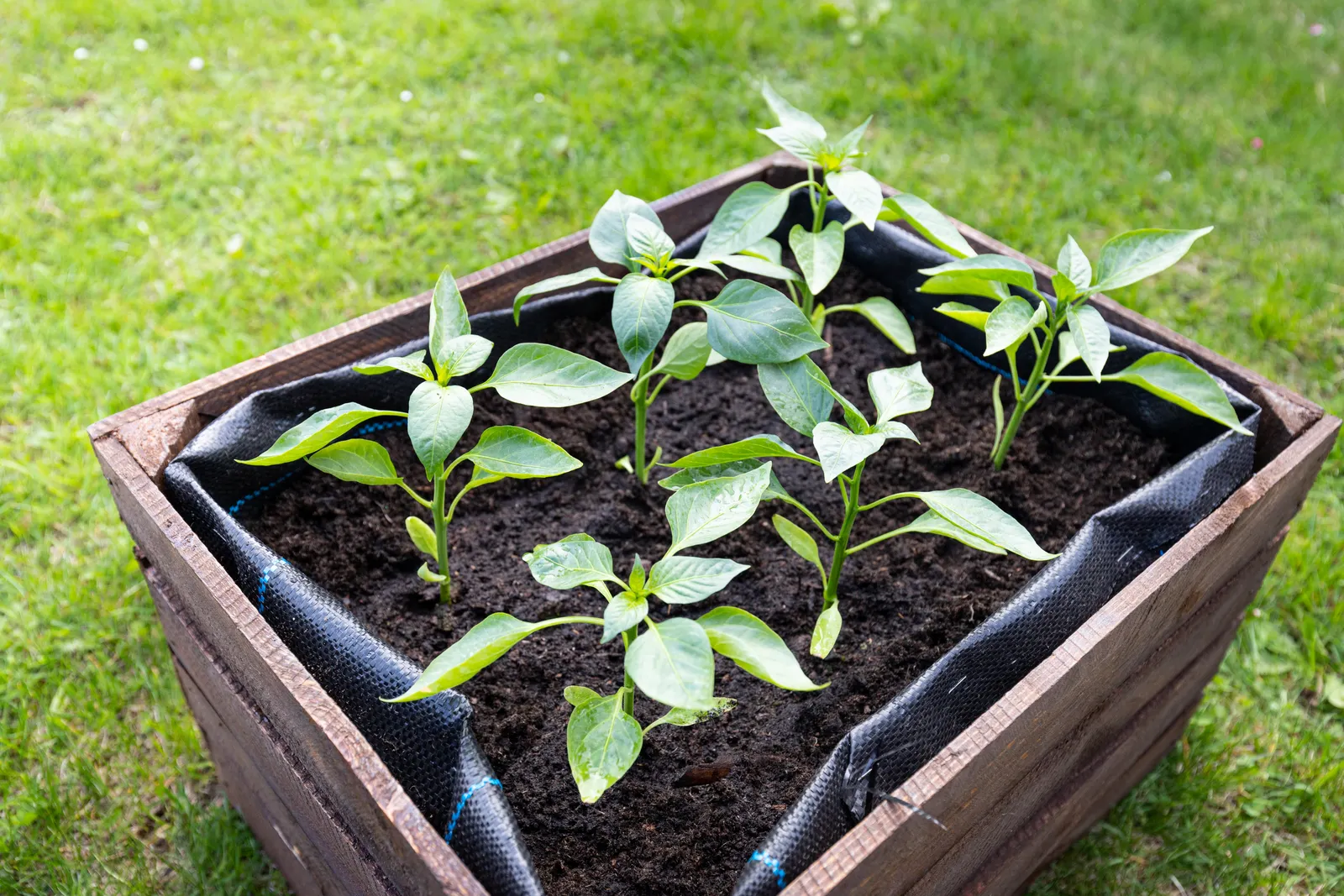
How the raised bed soil calculator works
Measure the inside of the bed, not the outside: timber walls can be 2 in thick on each side, and that difference is real soil. Measure length and width in feet and depth in inches, then the tool converts everything to cubic feet and cubic yards. For a round bed, measure straight across the middle (the diameter). For an L-shaped bed, split it into two rectangles and measure each one — the tool adds the two volumes together.
The formulas are simple and shown so you can check them:
- Rectangle: cubic yards = length (ft) x width (ft) x depth (ft) / 27.
- Round: cubic yards = pi x radius squared x depth (ft) / 27.
- L-shaped: work out each rectangle the same way, then add the two volumes.
- Order volume: calculated cubic yards x (1 + waste%), with waste set to 10% by default.
- 40 lb topsoil bags: bags = cubic yards x 54, rounded up — one 40 lb bag is about 0.50 cu ft, and 54 bags make a yard.
- Recipe components: order cubic yards x recipe share (for example 60% topsoil).
Every figure this raised bed soil calculator shows comes from the order volume, not the bare calculated volume — the recipe parts, the bag counts and the cost all use the volume you actually need to buy. Depth matters more than most people expect: going from 6 in to 12 in doubles the soil, and going to 18 in triples it, so pick the depth from the crop table below before you order.
What to order
- Order volume: the calculated cubic yards plus 10% waste. For the standard 4×8 ft bed at 12 in, order 1.30 yd3.
- Bags: if you buy bagged, order the bags for the order volume — 71 x 40 lb bags for that same bed — not the 64 bags the bare calculation gives.
- Mix components: order the recipe parts by the order volume: 0.78 yd3 topsoil, 0.39 yd3 compost and 0.13 yd3 perlite for the 60/30/10 mix on a 4×8 ft bed.
- Bulk or bagged? Bulk is usually far cheaper once you need a yard or more; bagged only wins for a single small bed or a top-up.
- Delivery: one trip covers the whole order if you buy it together — $50–$150 per trip. Tick the delivery box in the tool to add it.
- Settling top-up (separate line): fresh mix settles 10–15% in the first weeks (Eartheasy). On a 4×8 ft bed expect to top up about 0.12–0.18 yd3 after a month. The tool does not add settling to your order — buy the top-up separately, or keep a little back.
Soil prices in 2026 — planning ranges, not quotes
All prices below are 2026 planning ranges, not quotes. Your local yard’s price depends on the source, the season and how far the truck drives. Use the ranges to budget, then confirm the real price with one phone call before you order.
- Screened topsoil: $25–$50/yd3.
- Compost: $20–$42/yd3 (Lawn Love, 2026).
- Bulk blend (topsoil and compost mixed): $40–$80/yd3 (UseCalcPro).
- Triple mix: $55–$100/yd3.
- Bagged topsoil, 40 lb bag: $2–$5/bag.
- Bagged raised-bed mix: $120–$200/yd3 equivalent — the convenience costs roughly double.
Common bed sizes — cubic yards and bags
Calculated cubic yards, order cubic yards at 10% waste, and the bag count for the order volume (40 lb bags, 54 per yard).
| Bed size | Depth | Calculated yd3 | Order yd3 (10% waste) | Order bags (40 lb) |
|---|---|---|---|---|
| 4×4 ft | 6 in | 0.30 | 0.33 | 18 |
| 4×4 ft | 8 in | 0.40 | 0.43 | 24 |
| 4×4 ft | 12 in | 0.59 | 0.65 | 36 |
| 4×8 ft | 6 in | 0.59 | 0.65 | 36 |
| 4×8 ft | 8 in | 0.79 | 0.87 | 47 |
| 4×8 ft | 12 in | 1.19 | 1.30 | 71 |
How deep should a raised bed be?
| Crop | Depth | Notes |
|---|---|---|
| Herbs and salad greens | 6–8 in | Shallow roots; a 6 in bed is enough. |
| Vegetables | 10–12 in | The standard depth for tomatoes, peppers and beans. |
| Deep-rooted (carrots, parsnips) | 18–24 in | Long roots need the full depth — use a tall bed, not a shallow one on hard ground. |
| Flowers | 8–12 in | Most annuals and perennials are happy at 8–12 in. |
Mix recipes for raised beds
| Recipe | Mix | Best for |
|---|---|---|
| 60/30/10 (primary) | 60% topsoil, 30% compost, 10% perlite | General vegetables — holds moisture, drains well, stays loose. |
| 70/30 | 70% topsoil, 30% compost | Simple, proven blend (Penn State and Iowa State Extension). |
| 40/40/20 | 40% topsoil, 40% compost, 20% perlite | Extra-rich, very free-draining mix (UseCalcPro). |
Worked example: a 4×8 ft raised bed
Test 1 — rectangle, 4×8 ft, 12 in deep, 60/30/10 mix. Volume = 4 x 8 x 1 ft = 32.0 cu ft. Calculated cubic yards = 32.0 / 27 = 1.19 yd3. Order volume at 10% waste = 1.19 x 1.10 = 1.30 yd3. Bags = 1.19 x 54 = 64 bags (calculated) and 1.30 x 54 = 71 bags (order). Recipe on the order volume: topsoil 1.30 x 60% = 0.78 yd3, compost 1.30 x 30% = 0.39 yd3, perlite 1.30 x 10% = 0.13 yd3. Cost: bulk blend 1.30 x $40–$80 = $52–$104; bagged 71 x $2–$5 = $142–$355; delivery $50–$150 if ticked.
Test 2 — round bed, 4 ft diameter, 12 in deep. Area = pi x 2 squared = 12.57 sq ft. Volume = 12.57 x 1 ft = 12.57 cu ft. Calculated cubic yards = 12.57 / 27 = 0.47 yd3. Order volume = 0.47 x 1.10 = 0.51 yd3. Bags = 0.47 x 54 = 26 bags (calculated) and 0.51 x 54 = 28 bags (order). Recipe on the order volume: topsoil 0.31 yd3, compost 0.15 yd3, perlite 0.05 yd3.
Raised beds in Texas
In much of Texas the ground is caliche — hard, pale, alkaline and almost impossible to dig — and raised beds are the honest answer: you build good soil on top of it instead of fighting it. In Lubbock heat a bed also dries from the sides, not just the top, so mulch the surface and water deeply rather than often. A 12 in bed of the 60/30/10 mix holds moisture far better than bare caliche ever will, and the compost in the mix buffers the alkalinity a little. If you want the full picture on watering costs, see the Lawn Watering Cost Calculator.
Mistakes to avoid
The most common errors are all avoidable — and this tool cannot fix a bad mix, it can only measure a good one.
- Topsoil only. Straight topsoil compacts into a brick in a bed. Mix in compost (and perlite) so roots can breathe.
- Compost only. Pure compost shrinks as it keeps breaking down — your bed will be half empty by midsummer.
- Fill dirt. Fill dirt has no organic matter and no nutrients. It is for levelling ground, not for growing food.
- Skipping the settling top-up. Fresh mix settles 10–15% in the first weeks. Plan the top-up or your plants end up in a half-full bed.
- Landscape fabric on soil. Fabric under a bed blocks drainage and keeps worms out. Use it on concrete only — never between your mix and the ground.
Frequently asked questions
How much soil does the raised bed soil calculator say I need for a 4×8 raised bed?
At 12 in deep, a 4×8 ft bed needs 1.19 cubic yards calculated, or 1.30 cubic yards to order with 10% waste — 71 x 40 lb bags. Shallower beds need less: at 6 in it is 0.59 yd3 calculated (0.65 yd3 to order, 36 bags).
Can I fill a raised bed with topsoil only?
You can, but you should not. Topsoil alone compacts, drains poorly and has little organic matter. Mix in compost — the 60/30/10 recipe (60% topsoil, 30% compost, 10% perlite) is the standard starting point. For topsoil on its own, see our Topsoil Calculator.
How deep should a raised bed be?
Twelve inches for most vegetables, 6–8 in for herbs and salad greens, and 18 in or more for deep-rooted crops like carrots and parsnips. Flowers are usually fine at 8–12 in.
Will the soil settle?
Yes — fresh mix settles 10–15% in the first few weeks (Eartheasy). On a 4×8 ft bed expect to top up about 0.12–0.18 yd3 after a month. The tool shows the top-up as a separate line and does not add it to your order.
Should I put landscape fabric under a raised bed?
No on soil — it blocks drainage and keeps worms out of the bed. Yes on concrete, where it keeps the mix from washing out of the drainage gaps. On open ground, a layer of cardboard is the usual alternative: it smothers weeds and rots away.
Can I fill a raised bed in fall?
Yes — fall is a good time to build and fill a raised bed. Fill it now and the soil settles 2–4 inches over winter, so you top it up on bare soil in February instead of working around plants in June. Unfinished compost gets months to finish before roots go near it. A good rule of thumb is about 70% bulk soil to 30% finished compost. After the first hard freeze, cover the bed with leaf mulch to hold moisture and keep weeds down. University of Minnesota Extension confirms filling beds with soil and compost in fall so they are ready for spring planting.
Can I fill a raised bed in winter?
Yes — as long as the soil isn’t frozen. Raised beds can be built and filled at any time of year; just avoid working soil that is very wet or frozen, because frozen soil can’t be levelled or firmed and won’t settle evenly. Fill the bed to about 2 inches below the rim, firm it down, and let it settle for a couple of weeks, then top it up — soil typically settles 2–4 inches over winter. If the bed is already filled, winterize it instead of leaving it bare: pull out diseased plants, spread 1–2 inches of finished compost on top, and cover the surface with 2–4 inches of shredded leaves or clean straw. Bare soil loses structure fast in winter — rain hammers it, wind strips it, and freeze–thaw cycles heave it — while mulch holds moisture, steadies soil temperature and feeds microbes until spring. In Lubbock, winter usually gives you workable windows — December highs average around 54°F — so pick a dry, unfrozen day; if the ground is frozen or snow-covered, wait for a thaw.
Related tools
Topsoil Calculator | Mulch Calculator | Cubic Yard Calculator
Sources and further reading
UseCalcPro (bulk blend and triple-mix bands) · Lawn Love (compost prices, 2026) · topsoil.com · Eartheasy (settling and bed depth) · UF/IFAS · Penn State Extension and Iowa State Extension (70/30 mix).
This raised bed soil calculator was last reviewed on Nov 9, 2026. Prices are 2026 planning ranges, not quotes — check with your local supplier before ordering. Spotted a mistake or a price that has moved? Tell us and we will check it and correct the page.
Need a pro in Lubbock?
If you would rather have the beds built and filled for you, a local landscaper can quote the whole job — soil, delivery and labour included. See Landscaping Lubbock for local installed quotes.
One last check before you order: run the numbers twice — once with the bulk price and once with the bagged price — and you will see why this raised bed soil calculator shows both routes side by side. And if your bed is an unusual shape, measure it twice and enter the inside dimensions: the raised bed soil calculator is only as accurate as the measurements you give it.